Loading...
Serving San Ramon, CA and surrounding areas. (925) 678-6684
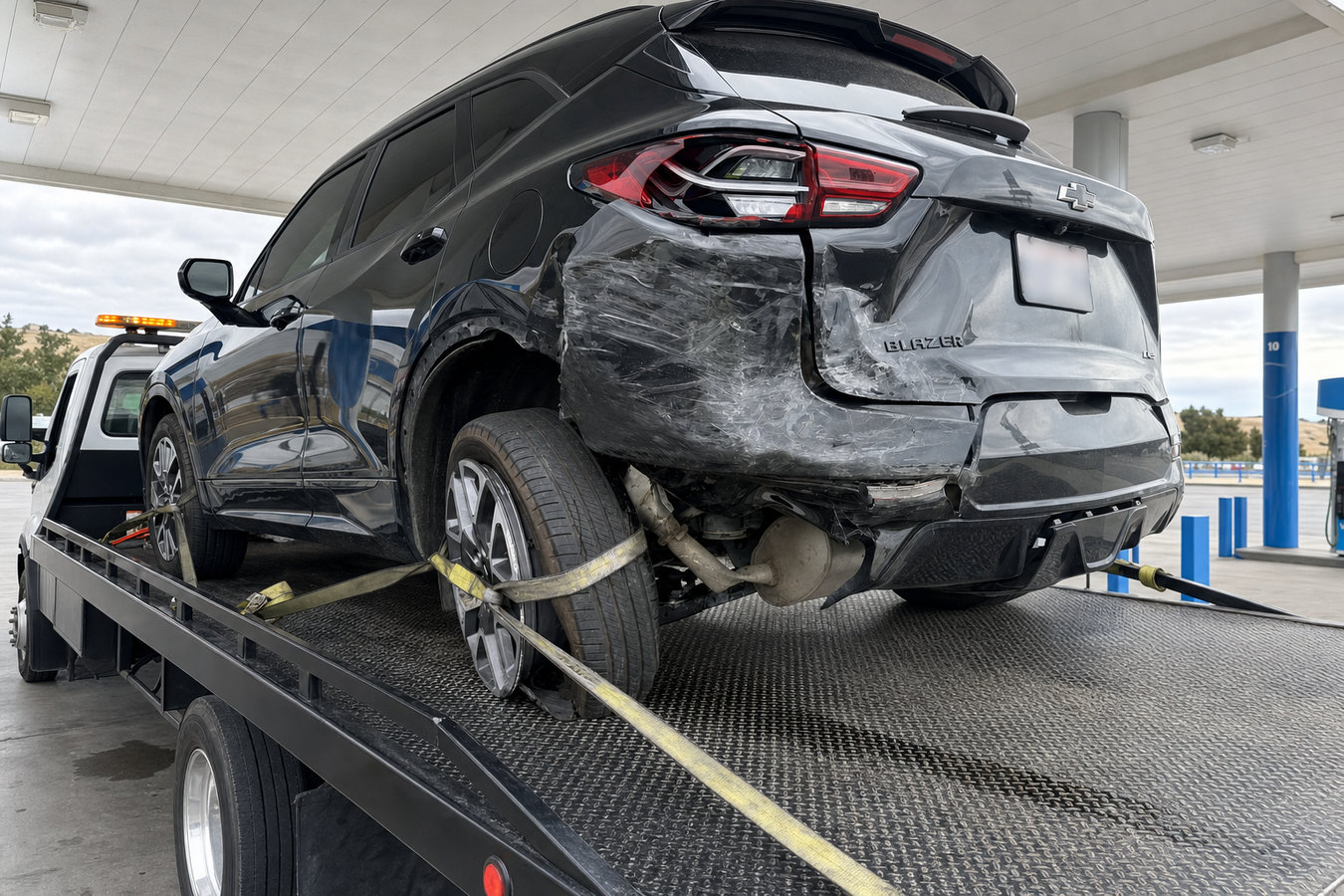
After a crash on I-680 or any road in the Tri-Valley, your vehicle needs more than a tow. We assess the scene first, use the right equipment for your car's position, and get it to wherever it needs to go without adding new damage.
Accident recovery in San Ramon is the process of safely removing a vehicle from a crash scene - whether it is upright or on its side, blocking a lane on I-680, or down an embankment off Crow Canyon Road - using the right equipment for the vehicle's exact position, and transporting it to a body shop, dealer, or storage facility.
This is different from a routine tow because the vehicle is often at an odd angle, partially blocking traffic, or resting against something it should not be. The crew needs to stabilize the vehicle before attaching anything, which takes more time and more specialized equipment. If a fluid leak is present, that adds another layer of caution before anything moves. Our wrecker service handles heavier or more complex crash scenes, and our emergency towing team is dispatched any time of day or night when a vehicle is blocking traffic or a driver is stranded.
Visible structural damage, a deployed airbag, a flat tire from impact, or fluid leaking underneath are all signs the car should not be driven. Even if it starts, a compromised vehicle can cause additional damage or create a hazard. Call for recovery and let the crew assess the situation.
A vehicle stopped in a travel lane on I-680 or a busy arterial like Crow Canyon Road after a crash is a serious hazard for everyone on the road. Get yourself to safety first, then call immediately. Clearing a blocking vehicle on a Tri-Valley freeway takes priority and coordination with the California Highway Patrol.
If your car has left the roadway - into a ditch, down an embankment, or against a barrier - a standard tow truck may not be enough to get it back. Recovery from an off-road position usually requires a winch or boom to pull the vehicle back to a surface where it can be loaded safely.
Tule fog on I-680 and the Tri-Valley valley floor causes chain-reaction crashes in fall and winter mornings. These scenes may involve multiple vehicles and are often managed by the California Highway Patrol. Call a recovery service as soon as you are safely out of the vehicle.
Every accident recovery starts with a scene assessment before any equipment touches the vehicle. We check the car's position, look for fluid leaks, note any structural damage, and determine whether a flatbed, wheel-lift, or winch-and-boom combination is the right approach for this specific situation. For a vehicle upright and accessible, a flatbed carrier lifts all four wheels off the ground - the safest option for a damaged car. For a vehicle that has gone off the road or is on its side, a winch or boom is used to pull or right it before loading. Our wrecker service handles commercial vehicles and larger, more complex crash scenes that require heavy-duty wreckers.
Once the vehicle is secured, we transport it wherever you direct - a body shop, dealership, your home, or our storage yard if you need time to sort out insurance first. If the California Highway Patrol or local police are on scene, we coordinate with them before moving anything. We also provide emergency towing for situations where a driver is stranded and needs immediate vehicle removal, whether or not a crash was involved.
Best for damaged but upright vehicles - all four wheels off the ground, no dragging, no additional stress on the drivetrain.
For vehicles that have gone off the road, into a ditch, or down an embankment - pulled back to a stable surface before loading.
When a vehicle is on its side or upside down, a winch or boom arm rights the vehicle before transport can begin.
Fog-related or chain-reaction crashes on I-680 may involve multiple vehicles - we coordinate with law enforcement on scene clearance.
Crashes do not keep business hours. Our dispatch team responds around the clock for roadside accident recovery.
If you are not sure where your car should go after the crash, we can hold it at our yard while you contact your insurer and choose a shop.
San Ramon sits along I-680, one of the busiest commuter freeways in the East Bay, carrying high-volume, high-speed traffic between the Tri-Valley, the South Bay, and the Caldecott Tunnel corridor. When a crash happens on this stretch, recovery crews work in active freeway conditions alongside the California Highway Patrol - which adds complexity and requires traffic incident management training that not every tow operator has. Crow Canyon Road and Bollinger Canyon Road, the main east-west surface streets through San Ramon's residential and business districts, present their own challenge: winding grades, limited shoulder space, and tight curves where a vehicle that has gone off the edge requires winching before it can be loaded.
The Tri-Valley also experiences seasonal tule fog in fall and winter mornings, which reduces visibility to near zero on I-680 and the valley floor and is a known cause of multi-vehicle crashes. Having a recovery number saved before you need it matters here. We regularly respond to calls in Walnut Creek to the north and Pleasanton to the south along the I-680 corridor, so our crew knows this stretch well. An external resource on traffic incident management is available through the Federal Highway Administration.
Tell dispatch your exact location - nearest cross street, freeway exit, or mile marker - plus what happened and whether the car is blocking traffic. If there are fluid leaks or the vehicle is on its side, say so. This determines which equipment is sent.
On I-680 during peak Tri-Valley commute hours, travel time can be longer than at other times of day. We give you an honest ETA and update you if conditions change. We respond to scheduling inquiries within 1 business day, and immediately for active roadside emergencies.
When we arrive, we check the vehicle's position, any fluid leaks, structural damage, and whether it is stable. If the CHP or another agency is on scene, we coordinate with them first. This step prevents new damage and keeps everyone at the scene safe.
We use the right method for your car's condition - flatbed for an upright damaged vehicle, winch or boom for off-road situations. Once secured, it goes to your chosen destination. You receive an itemized receipt at drop-off that your insurer will need for the claim.
We dispatch around the clock for crash scenes and stranded vehicles. No obligation to ask a question first. After you reach out, someone from our team calls you directly to discuss the situation and what to expect before any work begins.
(925) 678-6684A car against a barrier on I-680 and a car in a ditch off Crow Canyon Road require different approaches. We assess before we attach anything, and we use a flatbed, winch, or boom based on what your vehicle actually needs - not on what is easiest to send.
We have been responding to accidents on I-680 and connecting Tri-Valley roads since 2019 and know the corridor's merge points, CHP coordination protocols, and the limited shoulder space that makes these recoveries more complex than they look. The Towing and Recovery Association of America sets the professional standards our operators follow.
California requires towing operators to carry proper licensing and insurance. We meet those requirements, which means you have recourse if something goes wrong with your vehicle during transport - and your insurer can verify our credentials when processing your claim.
Towing rates in California are often regulated, and we tell you our rates before we dispatch. You get a complete, itemized invoice at drop-off that your insurance company can use to evaluate and process your recovery claim without hassle.
After a crash, most people are not thinking clearly. A provider who shows up with the right equipment, explains what they are doing, and hands you an itemized receipt at the end makes an already stressful situation significantly easier.
Heavy wreckers for commercial vehicles and complex crash scenes that require more lifting and rigging capacity than a standard recovery setup.
Learn MoreAround-the-clock dispatch for any stranded or blocking vehicle - crashes, breakdowns, or any situation where the car cannot stay where it is.
Learn MoreI-680 accidents happen without warning - keep (925) 678-6684 in your phone so one call gets recovery moving before the situation gets worse.